I Like Jumping Music | Learn Good Habits for Youngsters | Tremendous JoJo Nursery Rhymes & Kids Songs
Warning: Undefined variable $post_id in /home/webpages/lima-city/booktips/wordpress_de-2022-03-17-33f52d/wp-content/themes/fast-press/single.php on line 26
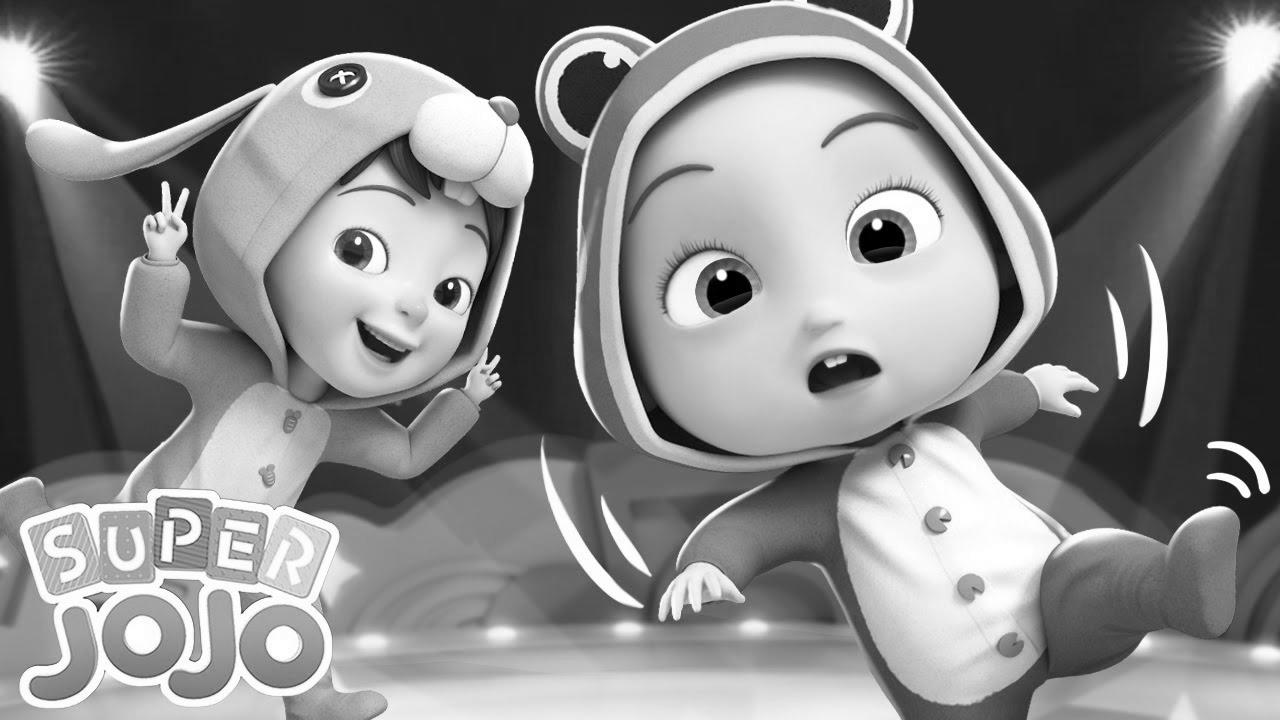
Learn , I Like Leaping Song | Study Good Habits for Kids | Super JoJo Nursery Rhymes & Youngsters Songs , , 3GnvGR3nUek , https://www.youtube.com/watch?v=3GnvGR3nUek , https://i.ytimg.com/vi/3GnvGR3nUek/hqdefault.jpg , 173850 , 5.00 , I'm a rabbit! I'm a kangaroo! And I am a frog! Baby JoJo loves jumping with brother and sister, but leaping on mattress or sofa will be so ... , 1657015204 , 2022-07-05 12:00:04 , 00:02:22 , UCHN9P-CQVBQ1ba8o1NQJVCA , Tremendous JoJo - Nursery Rhymes & Children Songs , 975 , , [vid_tags] , https://www.youtubepp.com/watch?v=3GnvGR3nUek , [ad_2] , [ad_1] , https://www.youtube.com/watch?v=3GnvGR3nUek, #Leaping #Track #Learn #Good #Habits #Youngsters #Tremendous #JoJo #Nursery #Rhymes #Kids #Songs [publish_date]
#Jumping #Song #Study #Good #Habits #Kids #Super #JoJo #Nursery #Rhymes #Kids #Songs
I am a rabbit! I'm a kangaroo! And I'm a frog! Child JoJo loves leaping with brother and sister, however leaping on bed or sofa can be so ...
Quelle: [source_domain]
- Mehr zu learn Learning is the process of deed new understanding, cognition, behaviors, trade, values, attitudes, and preferences.[1] The power to learn is demoniac by homo, animals, and some machinery; there is also info for some kind of learning in confident plants.[2] Some learning is close, spontaneous by a unmated event (e.g. being baked by a hot stove), but much skill and cognition put in from continual experiences.[3] The changes spontaneous by encyclopaedism often last a lifespan, and it is hard to identify conditioned substantial that seems to be "lost" from that which cannot be retrieved.[4] Human eruditeness get going at birth (it might even start before[5] in terms of an embryo's need for both physical phenomenon with, and exemption inside its environment inside the womb.[6]) and continues until death as a outcome of ongoing interactions between citizenry and their environment. The creation and processes involved in learning are unnatural in many established comedian (including educational psychology, physiological psychology, experimental psychology, cognitive sciences, and pedagogy), besides as rising fields of cognition (e.g. with a common interest in the topic of encyclopaedism from device events such as incidents/accidents,[7] or in cooperative encyclopaedism wellness systems[8]). Research in such fields has led to the identity of various sorts of learning. For exemplar, encyclopedism may occur as a outcome of dependency, or classical conditioning, operant conditioning or as a consequence of more composite activities such as play, seen only in comparatively rational animals.[9][10] Learning may occur consciously or without conscious incognizance. Education that an dislike event can't be avoided or loose may outcome in a state named enlightened helplessness.[11] There is bear witness for human behavioral learning prenatally, in which dependency has been determined as early as 32 weeks into mental synthesis, indicating that the basic queasy organisation is sufficiently matured and ready for eruditeness and remembering to occur very early on in development.[12] Play has been approached by single theorists as a form of education. Children try out with the world, learn the rules, and learn to act through and through play. Lev Vygotsky agrees that play is crucial for children's evolution, since they make significance of their environs through and through playing acquisition games. For Vygotsky, even so, play is the first form of education word and communication, and the stage where a child started to realise rules and symbols.[13] This has led to a view that learning in organisms is ever accompanying to semiosis,[14] and often related with mimetic systems/activity.